Pages

Showing posts with label Nissan. Show all posts

Friday, May 27, 2011

Review And Specs nissan leaf

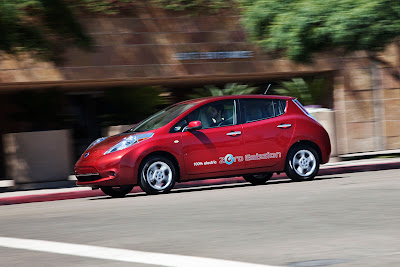
It seems that the electric car is back from the dead. You may have noticed that Nissan obviously no trend in hybrid cars. While other producers to pump more money into research and development of hybrid Nissan lead to a true all electric vehicle. The end result is the 2011 Nissan Leaf, the first mass produced all electric car to be placed on the sale of American consumers. The following is a description of the features and specifications.
New Nissan blades powered by a lithium-ion rechargeable battery making it one of the first vehicle of sophisticated technology. New lithium-ion batteries have a longer range and better acceleration than comparable size batteries nickel metal hydride. There are several ways to recharge the system. 1) Station Nissan for the family, which runs on 220 volts and must be installed by a certified electrician. This charger takes about 4 to 8 hours with full costs. 2) Leaves Commercial Base Station, this option only takes about 30 minutes but this time there are limited seats for this method. Nissan is currently working with various cities and companies across the country for commercial infrastructure charging points to be developed. The leaves have filled an estimated range of 100 miles.

There are two trim levels are available:
SV standard equipment includes keyless ignition, keyless entry, automatic climate control, 16-inch alloy wheels, power lock, power windows, cruise control, LED lights, tilt steering wheel, 60/40 folding rear seat, height adjustable driver’s seat, the computer travel, fabric made from recycled materials, Bluetooth, six-speaker sound system with CD player, auto dimming rear view mirrors, satellite radio, iPods and USB interface, additional audio connectivity and navigation system. Machine is 80 kilowatt synchronous electric motor powered by a battery 24 kWh lithium-ion batteries. Output of 107 horsepower and 207 pounds feet of torque. Standard safety equipment includes stability control, traction control, ABS brakes, airbags and side curtain airbags.

SL-Adding automatic lights, reversing cameras, solar panels mounted spoiler, fog lamps and cargo cover. All the machinery and safety standards remain the same.
All the leaves come standard with Nissan Nissan Connection, remote system that reports the battery data and to enable the climate control device.

Thursday, May 26, 2011

Nissan 370Z Roadster, 2010

Nissan 370Z Roadster, 2010


The Truly Authentic Roadster
The Nissan 370Z Roadster's most obvious departure from the 370Z Coupe is its convertible top. The soft-top roof was designed with an emphasis on three key areas: to provide a sleek silhouette matching the new Z's stunning styling with the top up or down, to offer easy single-action open-close operation, and to provide an enjoyable top-down experience with reduced wind turbulence and all-climate driver/passenger comfort.

With convertible top in the closed position, the design provides a sophisticated sloped-back appearance, the perfect balance between the soft top and the Z body design. The shortened windshield and aerodynamically rounded rear deck enhance the Z®'s kinetic and dynamic character lines. When in the down position, the convertible top is concealed beneath a full body-color hard tonneau cover, which extends forward to help create the Z Roadster's classic "double cockpit" style interior.

The standard black cloth convertible top features a fabric inner liner, which provides a quality appearance and helps reduce noise intrusion into the cabin, along with an enlarged (versus the previous generation Z Roadster) glass rear window with an integrated electric rear window defroster. The top operation takes approximately 20 seconds start-to-finish and is controlled by either a center console-mounted switch or by a button located on the doors. The automatic latch system secures the top to - or releases it from - the windshield header without driver intervention. The shape and position of the glass wind deflector, located between the fixed headrest bars, has been optimized to reduce turbulence into the cabin.

Inside the stunning exterior, true to its sports car heritage, the Z Roadster's interior is completely driver-centric, with its three-layer design grouping items by how a driver sees information, operates the controls and is held in place - so drivers feel completely connected and engaged whenever and wherever they drive, top up or down.

The Z Roadster features high back black woven "Carbon" cloth seats with 8-way manual driver's/4-way manual passenger's seat adjustments. Touring models include unique leather-appointed "net" seats with 4-way power/4-way manual operation on the driver's seat (4-way power on the passenger's seat). These second-generation net seats are exclusive to the Z Roadster and have integrated heating and cooling functions - ideal for open air driving no matter what the outside temperature. Adjustable front seat Active Head Restraints are also standard.

Open Air, Open Roads - An Unbeatable Combination
Roadster or Coupe, the new Z®s share one of the most advanced drivetrains available for affordable sports cars today. The Z® Roadster's long list of cutting edge performance-focused technologies includes a standard 332-horsepower 3.7-liter DOHC V6 engine with Variable Valve Event and Lift Control (VVEL), choice of 7-speed automatic transmission or close-ratio 6-speed manual with available "SynchroRev Match" (the world's first synchronized downshift rev matching manual transmission), refined 4-wheel independent suspension and 4-wheel vented disc brakes (with available Nissan Sport Brakes).

Compared to the previous generation 350Z Roadster, the new Z® convertible picks up 26 horsepower and 2 lb-ft of torque (332 horsepower @ 7,000 rpm and 270 lb-ft of torque @ 5,200 rpm, compared with the previous 3.5-liter V6's 306 horsepower @ 6,800 rpm and 268 lb-ft of toque @ 4,800 rpm).

Along with its larger displacement, the 3.7-liter engine gives better power delivery all the way to the 7,500 rpm redline, improved low-end power and more high-end torque, creating an entirely new driving experience. Key to the enhanced performance is the VVEL system, which is able to optimize intake valve open/close movements, allowing the needed air to be sent promptly to the combustion chamber at the precisely optimized time. Since the VVEL system can adjust to open the valves slightly, it improves fuel efficiency by reducing camshaft friction and fuel waste. It also provides cleaner emissions by allowing for quicker warm-up of the catalyst and by stabilizing combustion when the engine is cool.

The 2010 Z Roadster is offered with a choice of two new advanced transmissions - a close-ratio 6-speed manual or 7-speed automatic. The 6-speed manual is available with SynchroRev Match (included in the optional Sport Package), which allows drivers of any skill level to experience professional-like gear shift performance.

The Nissan 370Z Roadster's list of standard safety features includes the Nissan Advanced Air Bag System (AABS) with dual-stage supplemental front air bags with seat belt and occupant classification sensors; front seat-mounted side impact supplemental air bags; door-mounted curtain air bags; and seat belts with pretensioners and load limiters.
Other standard equipment includes Active Head Restraints, Zone Body Construction with front and rear crumple zones, Nissan Vehicle Immobilizer System, Vehicle Security System and Tire Pressure Monitoring System (TPMS).

Nissan Qazana Concept, 2009

Nissan Qazana Concept, 2009


The Nissan Qazana Concept is an intelligent, all-wheel drive crossover which is masculine, agile, lean, and designed for the tough city streets.

The Challenges tradition
In the same way that Nissan re-wrote the rule-book when it introduced Qashqai two years ago, so Nissan Qazana Concept is ready to do it again. By approaching the small car market from a totally different direction, Qazana invigorates, stimulates and rejuvenates the traditional town runabout.

The Compact dimensions
Compact overall dimensions (4060mm in length, 1570mm tall, 1780 wide and a wheelbase of 2530mm) mean Nissan Qazana Concept would be ideally suited to the urban environment. Yet its advanced specification and energetic styling suggest an ability that goes far beyond the city walls.

By mixing SUV and sports car styling cues, NDE's design team has created a highly individual Crossover quite unlike anything else on the road. The tall stance, truncated rear styling and short front and rear overhangs underscore its feeling of robustness and strength, but the low roof line, assertive side window graphic and broad shoulders hint at a sporting ability absent in traditional all-wheel drives.
At the same time, rounded elements - notably the wheel arches and bonnet - evoke a friendly ambiance and provide a link with existing Nissan Crossovers. Indeed, Qazana has the signature Crossover design detail in the rising window line at the rear, also found on Murano and Qashqai.

The Crossover styling
The profile is dominated by the prominent wheel arches and by the body's high waistline, which combine to give an impression of strength and which contrast vividly with the slim side windows. Echoing a style first seen on Mixim, Nissan's high performance electric coupé concept shown at the 2007 Frankfurt Show, the glasshouse resembles a crash helmet visor.

Though it appears at first glance to be a two-door coupé, Nissan Qazana Concept has a further pair of rear-hinged half doors to ease access to the rear compartment. All the doors are electrically operated and for safety reasons the rear pair can only be activated once the fronts have been opened. With no conventional B-pillar, access to the interior couldn't be easier.
One notable feature of the roof-line is the virtually straight cant rail above the doors which adds further to the strength of the profile. The roof itself has a pair of thin glass inserts running the full length of the roof which allow slithers of natural light into the cabin.
This contrast between sporty performance and all-terrain potential is underlined by the venturi-style skid plate at the rear of the vehicle, Qazana's extended ground clearance and the soft rubber spats which edge the wheel arches and help to disguise the vehicle's long suspension travel. The graphite coloured spats contrast vividly with the bold exterior colour, a unique shade called White Titanium, and the strikingly styled 20 inch black chrome alloy wheels.

Distinctive frontal aspect
The car's face is dominated by four headlamps. Two lower circular lamps set within the bumper contrast with a pair of daylight running strips mounted high on the wings on either side of the bonnet: the look is of a rally car preparing for a night stage.
While the full width grille, dominated by Nissan's centrally mounted badge, is an interpretation of current Nissan styling, its construction is not. A one-piece acrylic moulding, no cooling air can pass through the grille. Instead, the lower portion of the bumper, finished in a contrasting graphite colour, is dominated by a number of large holes for air to reach the radiator. See-through acrylic mouldings are also used for the door mirrors.

The interior has been designed as an extension of the exterior thanks to a clever interplay between hard and soft materials. Rather than being completely enveloped in leather for example, elements of the lightweight carbon fibre seat structure are on permanent view, appearing to have 'broken through' the covering. The centre portion of the backrests features a mesh material, allowing fresh air to circulate around the occupants.
Like the seats, the metal sections of the centre console seem to have forced their way through the leather covering while the internal door-frame is part exposed so that the door pull appears to be hewn from solid metal.

Motorcycle inspired interior
The way the structure appears through the fabric of the interior also reflects motorcycle design and construction.
Accentuating the practical side of the car, Nissan Qazana Concept has 'floating' seats centrally mounted over a one-piece rubberised floor covering, creating an openness in the cockpit. Grooves cut in the flooring are replicated on the seats themselves.
The dashboard is dominated by a centrally mounted screen. As well as doubling as a navigation display, it will deliver vital information relating to Nissan's next generation fully electronic ALL MODE four-wheel drive with torque vectoring system and other advanced technical processes found on board, including integrated communications systems. Using an intuitive touch-screen interface, the driver will be able to adjust the air-conditioning and other key vehicle settings.

Nissan Land Glider Concept, 2009

Nissan Land Glider Concept, 2009


The Nissan Land Glider concept, planners and designers of Nissan have conceived a totally new form of personal zero emission mobility that combines clever, new driving experiences, all in the one compact, 4-wheeled package.

With more than 50% of the world's population living in big cities in the near future, designers latched onto motorcycles as a credible base to start the design process.

While the agility, thrills and freedom of bikes inspired the designers and engineers, an extra spice was added to the mix. Tandem architecture became the obvious choice. A unique two-seater, cocoon-like structure sitting on a zero emission powertrain. With four-wheel stability and a sense of safety that originates from a tilting cabin, the Nissan Land Glider Concept will appeal to both two- and four-wheel driving enthusiasts.

Targeted at city dwellers of all generations, the Nissan Land Glider Concept is a serious motoring statement of the new era of mobility that Nissan intends to lead.

Cocoon in the shell
The exterior incorporates a soft, sleek-looking body that appears to be protected by a special armor, The four-wheeler boasts a dynamic body design that almost seems alive. As part of Nissan's expanding zero emission family, the Nissan Land Glider Concept exudes a clean, friendly attitude."

The vehicle's two-seater tandem layout is enveloped in what seems like the canopy of a glider, while its unique `tilt' setup employs a special leaning function that holds occupants firmly in place even when the vehicle is cornering at angles. In developing the Land Glider, Nissan designers have created a two-seater that offers the sense of security of a cocoon, but delivers real driving pleasure.

Corner and lean
Described as a `personal city commuter,' the Nissan Land Glider Concept features steering-by-wire and a lean capability when cornering ? like a motorcycle ? that enables the vehicle and its tires to lean by up to 17 degrees. Able to turn sharply at nearly any speed, the Nissan Land Glider employs sensors for vehicle speed, steering angle and yaw rate to instantly calculate the level of lean required to negotiate a corner. All the driver must do is turn and the cabin will lean accordingly. By enabling the car to lean, designers have succeeded in minimizing vehicle width and tire tread width, thus achieving a sleek, futuristic look.

Driven by rear electric motors
Two electric motors in the rear powered by lithium-ion batteries mounted beneath the floor, the zero-emissions Nissan Land Glider Concept is quick off the mark. The car also features a non-contact charging system that can be charged whilst shopping at a supermarket or stopping at a motorway service station. This system enables vehicles to be charged cable-less at locations where the infrastructure exists.

Collision Avoidance
To ensure maximum safety whilst driving, engineers have fitted a car-robotics style crash avoidance system in which sensors mounted in the body detect other vehicles in the same way as fish swim in schools without colliding. This system directs the vehicle's path away from any obstacles.

Whilst Nissan Land Glider is a concept car created for the Tokyo Motor Show, it should not be regarded as a mere design study. This leaning machine gives a clear direction to how a future small car from Nissan could look in congested cities...a clue of what Nissan means by new era of mobility.

Technical Specifications
* Overall Length: 3,100 mm
* Overall Width: 1,100 mm
* Overall Height: 1,415 mm
* Wheelbase: 2,180 mm
* Seating Capacity: 2

Saturday, April 23, 2011

Nissan Leaf Car of the year 2011

The Nissan Leaf was named 2011 World Car of the Year at the New York International Auto Show, taking the top spot ahead of the BMW 5-Series and the Audi A8. It is the second important award for the Japanese automaker’s all-electric car after being voted 2011 European Car of the Year.
Here's how the World Car Awards jurors justified their vote:
“The Leaf is the gateway to a brave new electric world from Nissan. This 5-seater, 5-door hatchback is the world's first, purpose-built, mass-produced electric car. It has a range of over 100 miles on a full charge claims Nissan, takes around 8 hours to recharge using 220-240V power supply and produces zero tailpipe emissions. Its low center of gravity produced sharp turn-in with almost no body roll and no understeer. The good news? It feels just like a normal car, only quieter.”
Launched in 2004, the World Car of the Year competition assesses cars with the help of a panel of automotive journalists from Asia, Europe and North America.
“This accolade recognizes Nissan LEAF, a pioneer in zero-emission mobility, as comparable in its driving performance, quietness and superb handling to gas-powered cars,” said Nissan Chairman and CEO Carlos Ghosn. “And it validates Nissan’s clear vision and the values of sustainable mobility that we want to offer to customers around the world.”
Currently available in Japan, the United States and select European markets, the Leaf will be launched in other global markets in 2012. The EV is built at Nissan’s Oppama plant in Japan, with U.S. and UK manufacturing to follow in late 2012 and early 2013 respectively (in Smyrna, Tennessee and Sunderland).


GALLERY


Friday, January 21, 2011

Nissan Altima Coupe

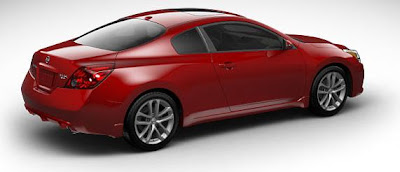
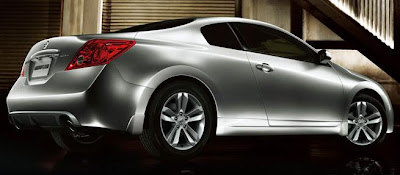
New 2010 Nissan Altima Coupe

New 2010 Nissan Altima Coupe

Nissan Altima Coupe 2.5 S 6M/T is equipped with a standard 2.5-liter, I4, 175-horsepower engine that achieves 23-mpg in the city and 31-mpg on the highway. The 3.5 SR 6M/T is equipped with a standard 3.5-liter, V6, 270-horsepower engine that achieves 18-mpg in the city and 27-mpg on the highway. A 6-speed manual transmission with overdrive is standard on both trims.

Sunday, January 16, 2011

2010 Nissan GT-R

It’s not often that we welcome a long-term tester so popular with staffers that it never remains parked overnight at our office. It’s even more rare for said tester to be a bona fide supercar, tried and proven as a legitimate Ferrari-Porsche-Lamborghini annihilator. Such was the case with our Super Silver Nissan GT-R Premium, which we enjoyed, flaunted, and admired every day of its yearlong test.
The GT-R’s popularity is understandable. Its storied lineage dates back more than four decades and includes all-wheel-drive monsters that ate up the competition — hence, the Godzilla nickname. Further, our long-termer’s combination of futuristic, controversial sheetmetal and spellbinding, Nurburgring-bred performance for well under $100,000 is indeed exceptional. The GT-R’s body drips with Japanese functionality, while paying homage to the natural world and famous ancestors. Most staffers considered themselves fans of the standout shape, which attracted innumerable stares, upturned thumbs, and shouts from balconies (really, that happened). A few, though, thought it too chunky for a sports car of such magnificent stature. Regardless of opinion, wherever it rolled, it made a bold statement.
There’s no denying the twin-turbocharged, 485-horsepower coupe is the consummate athlete: muscular in build, powerful in stance and vigor, and crafted specifically for constant physical exertion. We never grew tired of the 3.5-second 0-to-60-mph sprints this beast nonchalantly laid down, nor took for granted the unimaginable quickness of its six-speed twin-clutch transmission or the vice-like power from the racing-derived 15-inch Brembo brakes. Sure, there have been a few highly publicized instances of GT-R gearbox failure, but we experienced no trouble with our model’s unit after a year of tough driving, including about 40 full-bore acceleration launches. Let us repeat that last bit: no trouble at all.
We also never grew tired of its uncanny personality. As docile as a Sentra when trotting through town, the GT-R proved tame and collected when commanded, with none of the expected supercar demerits in terms of livability and usefulness. Click off a double-downshift with the slim magnesium left paddle, throw the GT-R into a corner, and its pent-up ferocity immediately transfers to its four huge Bridgestones. No other sports car at the GT-R’s price can match its utility and performance credentials.

Friday, January 14, 2011

2010 Nissan GT-R

It’s not often that we welcome a long-term tester so popular with staffers that it never remains parked overnight at our office. It’s even more rare for said tester to be a bona fide supercar, tried and proven as a legitimate Ferrari-Porsche-Lamborghini annihilator. Such was the case with our Super Silver Nissan GT-R Premium, which we enjoyed, flaunted, and admired every day of its yearlong test.
The GT-R’s popularity is understandable. Its storied lineage dates back more than four decades and includes all-wheel-drive monsters that ate up the competition — hence, the Godzilla nickname. Further, our long-termer’s combination of futuristic, controversial sheetmetal and spellbinding, Nurburgring-bred performance for well under $100,000 is indeed exceptional. The GT-R’s body drips with Japanese functionality, while paying homage to the natural world and famous ancestors. Most staffers considered themselves fans of the standout shape, which attracted innumerable stares, upturned thumbs, and shouts from balconies (really, that happened). A few, though, thought it too chunky for a sports car of such magnificent stature. Regardless of opinion, wherever it rolled, it made a bold statement.
There’s no denying the twin-turbocharged, 485-horsepower coupe is the consummate athlete: muscular in build, powerful in stance and vigor, and crafted specifically for constant physical exertion. We never grew tired of the 3.5-second 0-to-60-mph sprints this beast nonchalantly laid down, nor took for granted the unimaginable quickness of its six-speed twin-clutch transmission or the vice-like power from the racing-derived 15-inch Brembo brakes. Sure, there have been a few highly publicized instances of GT-R gearbox failure, but we experienced no trouble with our model’s unit after a year of tough driving, including about 40 full-bore acceleration launches. Let us repeat that last bit: no trouble at all.
We also never grew tired of its uncanny personality. As docile as a Sentra when trotting through town, the GT-R proved tame and collected when commanded, with none of the expected supercar demerits in terms of livability and usefulness. Click off a double-downshift with the slim magnesium left paddle, throw the GT-R into a corner, and its pent-up ferocity immediately transfers to its four huge Bridgestones. No other sports car at the GT-R’s price can match its utility and performance credentials.

2011 Nissan Leaf

While techies and sci-fi fans (yours truly included) may pine away for flying cars and the like, we’re not a major car-shopping demographic. As the recent firestorm surrounding the Chevrolet Volt demonstrated, your average consumers are interested in how comparable electric vehicles are to the gasoline-powered cars they already own. Because let’s be honest, buying an electric car requires a lifestyle change, with things like recharging, range, and maintenance. After 100-plus years of automobiles, we’re all very comfortable with the gasoline routine, and EVs represent a major departure from the familiar.
But they don’t have to, and that is the single most remarkable thing about the 2011 Nissan Leaf: It’s mostly unremarkable as a “Car of the Future.” And while that may seem like damning it with faint praise, it’s really the highest praise this car can be given. Nissan could’ve built a car that looked like it belonged in Star Wars, and four people would’ve bought it. Instead, it’s built a car that’s just different enough to stand out, but not enough to alienate potential buyers. As unfamiliar as the concept of a non-gasoline car may be to Joe Customer, the car itself is surprisingly familiar.
To make the point, Nissan invited us to drive the car in the towns and farms surrounding its Franklin, Tennessee, headquarters, and this time it would be a real drive. No more “take it around the block” quick tests. I strapped into a production-spec Leaf with a full battery and a guidebook that, after two driving loops, would take us on a 50-mile tour of central Tennessee. Time to find out what the Leaf is like in the real world…
At the risk of repeating myself, the Leaf proved to be quite ordinary. After 10 minutes of driving, the car felt completely normal, not unlike any other four-cylinder hatchback on the road. As amazing as that is, the lack of a learning curve was just as impressive. Sure, the touchiness of the regenerative brakes takes a bit of right-foot recalibration, and the silky smooth acceleration is something you won’t find in any gasoline-powered car short of a Rolls-Royce. But these differences fade quickly as you settle in. No special procedures or driving techniques are necessary; just drive it like you would any other car.

Nissan Ellure Concept

nissan-ellure-concept-rear-three-quarters
Revitalizing the sedan isn’t anything new to Nissan — just three years ago it introduced the current seventh-generation Maxima as the new age affordable “four-door sports car” (or 4DSC) fit for mall sprees and canyon runs. Even still, Nissan’s design leaders say, the well-aged segment remains bland.
For 2010 and beyond, there is a need for the sedan (otherwise known as the “rational or functional choice”, Nissan Design America vice president Alfonso Albaisa explained) to evolve into a vehicle with “more emotion”.
“A new customer is coming into this mature segment,” Albaisa mentioned at a private media gathering. Said customer is no longer predominantly male and in need of an athletic everyday people mover.
nissan-ellure-concept-rear-three-quartersnissan-ellure-concept-rear
“She’s between 30 and 40 years old,” the designer revealed. “She’s always respected the sedan, but she might be one that has a crossover or something else. The sedan has a value, but she thinks the sedan has become boring.”
Shiro Nakamura, Nissan senior vice president and chief creative officer (the main man in charge of all Nissan/Infiniti design), agrees. “Nissan crossovers are expressive. We’re trying to bring expression to the sedan.”
Under Nakamura-san’s guidance, everything also adheres to the “Spirit of Iki”. “Iki is the traditional Japanese way of expression,” he said. “(It is) fashionable, but not too showy. It has been used for over 500 years in Tokyo — mainly for common people.”
With that entire mindset, the automaker’s design houses in Kanagawa, Japan and San Diego, California collaborated to create the Ellure concept you see here.
nissan-ellure-concept-front-three-quartersnissan-ellure-concept-interior
Although completely fresh, its modern physique remains distinctly Nissan with broad elements, strong shoulders, and well-hidden traits derived from Japanese culture. The tension, release, and interception of dynamic shapes plays a key role in the styling philosophy, too.
nissan-ellure-concept-cockpitnissan-ellure-concept-cockpit
Crystalline LED lights are one trait designers employed to express a new emotion. Kinked, boomerang-shaped headlights look futuristic in a Tron sort of way and are matched with equally chiseled and drastically kinked LED taillights.